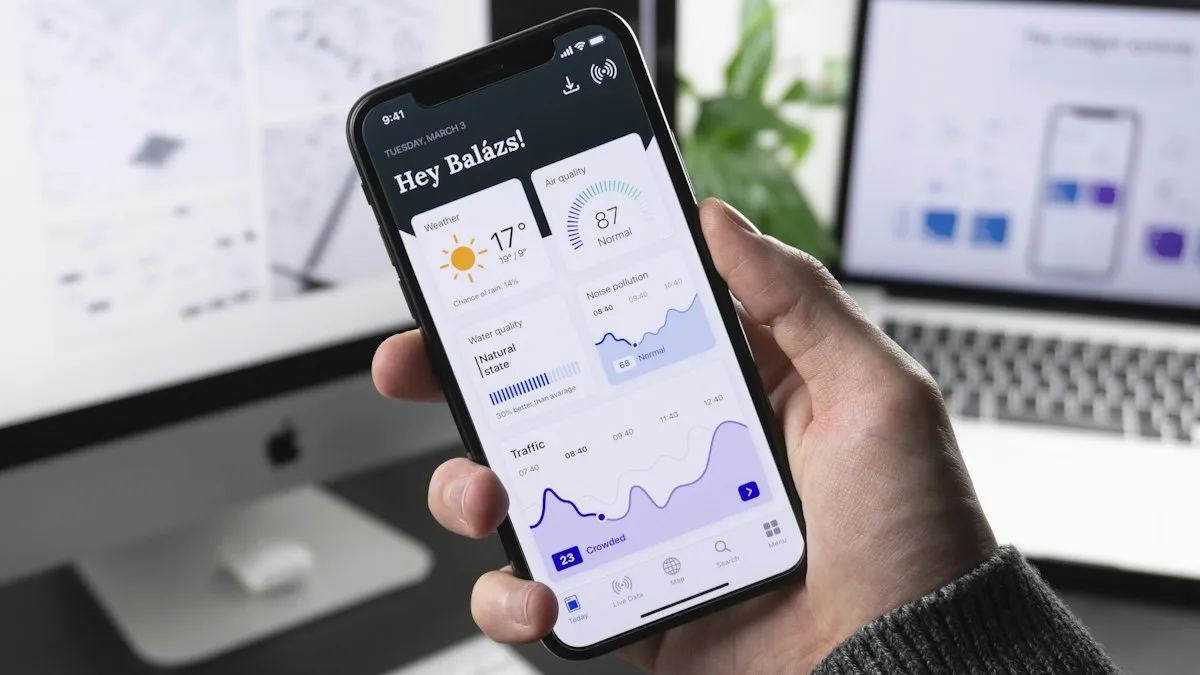
Building dedicated native applications for both iOS (Swift) and Android (Kotlin) requires maintaining two separate codebases, hiring two specialized development teams, and doubling your ongoing feature release and maintenance budget.
For over 90% of business applications, cross-platform mobile frameworks provide the optimal balance: a single codebase that compiles into native iOS and Android apps with 60fps performance and near-identical fidelity.
In 2026, the cross-platform landscape is dominated by two industry giants: Google's Flutter and Meta's React Native. Which framework should your business invest in?
1. Overview of Both Technologies
Flutter: Google's Complete UI Toolkit
Flutter compiles Dart code directly into ARM native machine code. Unlike other frameworks, Flutter does not rely on native platform UI widgets; instead, it renders every pixel using its own high-speed graphics engine (Impeller/Skia), similar to a modern game engine.
- Pixel-Perfect Uniformity: Your application looks and behaves 100% identically across every Android device, iPhone, and tablet version.
- Rich Widget Catalog: Extensive built-in Material 3 and Cupertino UI components ready for deployment out of the box.
- Backed by: Google, with extensive enterprise adoption (BMW, Alibaba, Google Pay, eBay).
React Native: Meta's Native Bridge Ecosystem
React Native pairs the power and ubiquity of React (JavaScript/TypeScript) with native OS platform primitives. When you write a `
- Truly Native Look & Feel: Automatically adopts the authentic OS design conventions of iOS and Android.
- Shared Web & Mobile Logic: If your web application is built in React, your team can share state management, API services, and business logic between web and mobile apps.
- Backed by: Meta, Microsoft, and massive global enterprise applications (Instagram, Shopify, Discord, Coinbase).
Historic criticisms of React Native centered on its asynchronous JSON bridge. With the full rollout of the New Architecture (TurboModules, Fabric renderer, and Hermes JavaScript engine), React Native renders synchronously with direct C++ bindings, closing the historical performance gap with Flutter.
2. Head-to-Head Comparison for Businesses
1. Development Velocity & Talent Availability in India
JavaScript and TypeScript remain the most widely spoken programming languages in the world. Finding seasoned React Native developers in India is significantly easier than finding specialized Dart/Flutter engineers. If your business already has React web developers, they can contribute to your mobile application with minimal learning curve.
2. Complex Custom UI and Brand Design
If your app features heavily customized, artistic UI with complex multi-layered vector graphics, canvas animations, or non-standard interactive charts, Flutter shines. Because Flutter controls every pixel rendered on screen, you avoid subtle cross-platform OS styling differences.
3. Third-Party Libraries & Native Device Modules
Both frameworks provide robust native bridges for camera, Bluetooth, GPS, biometric face/fingerprint authentication, and push notifications. However, when connecting to bleeding-edge third-party Indian SDKs (e.g., specialized KYC scanners or proprietary hardware POS terminals), React Native often receives faster vendor SDK support.
3. The Final Verdict: When to Choose Which
Choose Flutter If:
- Your priority is a visually stunning, custom-styled interface that must look exactly the same across every device.
- You are building an app from scratch without an existing React web ecosystem.
- You require heavy animation pipelines, custom canvas drawing, or interactive charting.
Choose React Native If:
- Your business already operates or plans to build a web platform in React / Next.js.
- You prefer standard OS native user interface controls.
- You want access to the largest developer talent pool in the global software industry.
- You anticipate frequent OTA (Over-The-Air) bug fixes via tools like Expo Application Services.
Need expert advice on your mobile application stack? Explore our cross-platform mobile app development services or request a consultation with our engineers.


